Stay Informed
Subscribe to receive information-only updates about the Mozambique Humanitarian Solidarity Campaign. Stay connected with the response without any fundraising solicitations.
What you'll receive
Situation updates
Latest developments on floods and conflict-related displacement
Photos & videos
Visual documentation from the field
Media coverage
Verified news and press highlights
Key milestones
Response progress and coordination updates
What you will not receive
Your details will be used exclusively for information and coordination purposes.
Subscribe to Campaign Updates
For donors, partners, media, institutions and supporters
Recent Updates
Latest information from the field, media coverage, and visual documentation
Photos & Videos
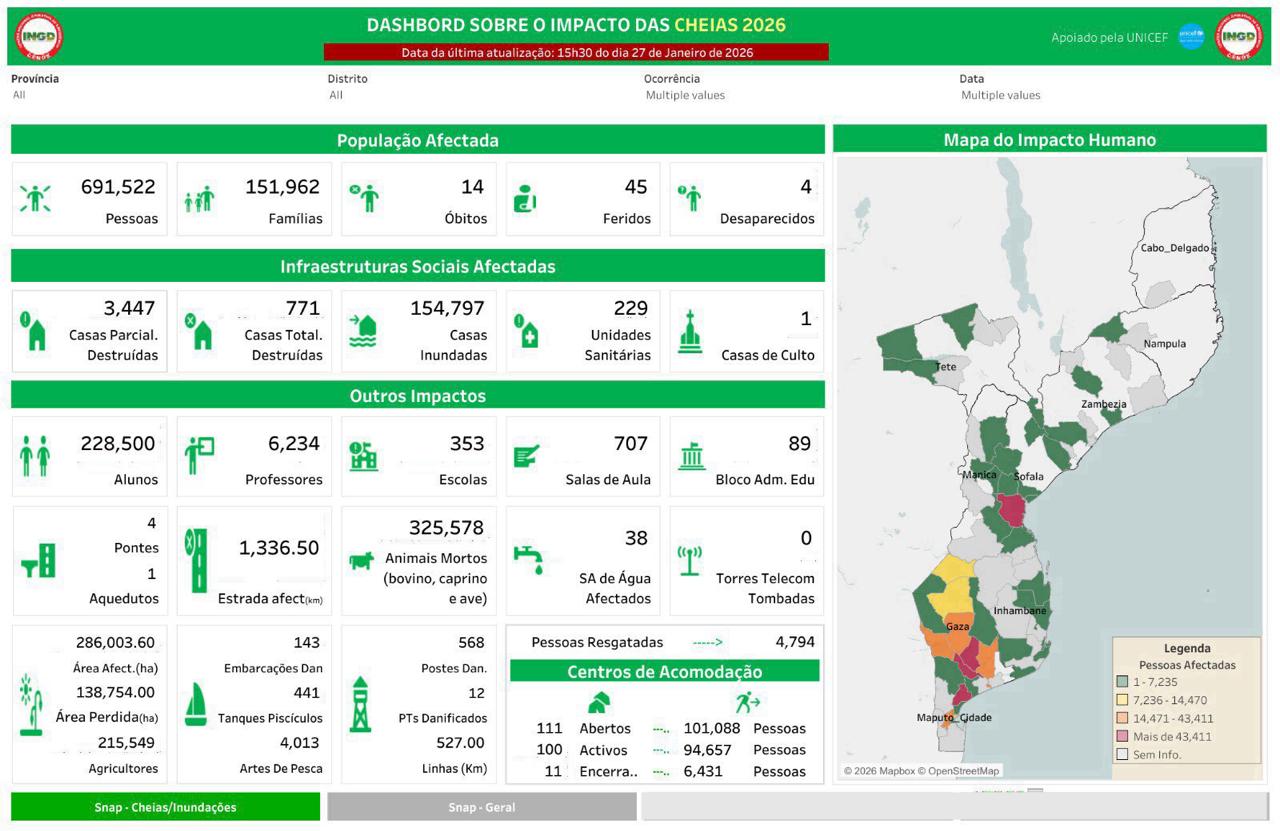
Flood Impact Dashboard
As of 27 January 2026 (15:30), more than 691,000 people have been affected, with 151,962 displaced, 4 deaths, 45 injured, and 4 missing. Housing has been heavily damaged, with 771 homes totally destroyed, 3,447 partially destroyed, and 154,797 flooded. Education and basic services were also hit, including 353 schools, 707 classrooms, 229 sanitation units, and disruptions to water and telecom infrastructure.
DNGRH calls for the immediate evacuation of the population from the low-lying areas of Magude and Manhiça.
Rising water levels and continued rainfall have significantly increased the likelihood of flooding in these districts, putting thousands of residents at risk. Authorities warn that low-lying zones are especially vulnerable to rapid inundation, which can cut off access routes and endanger lives.
Media Coverage
Flash Update No.4 – Heavy rains and floods in central and southern Mozambique
An estimated 600,000 people have been affected by flooding across southern and central Mozambique, particularly in Gaza, Maputo, and Sofala provinces, following heavy and persistent rainfall since mid-December. The majority of the people affected, 75 percent, are in Gaza.